Google AI Overviews for local businesses — what actually works in 2026
AI Overviews now appear on 40%+ of local search queries and cut through-clicks in half. Here's how to earn a citation in the AIO answer box instead of losing the click.
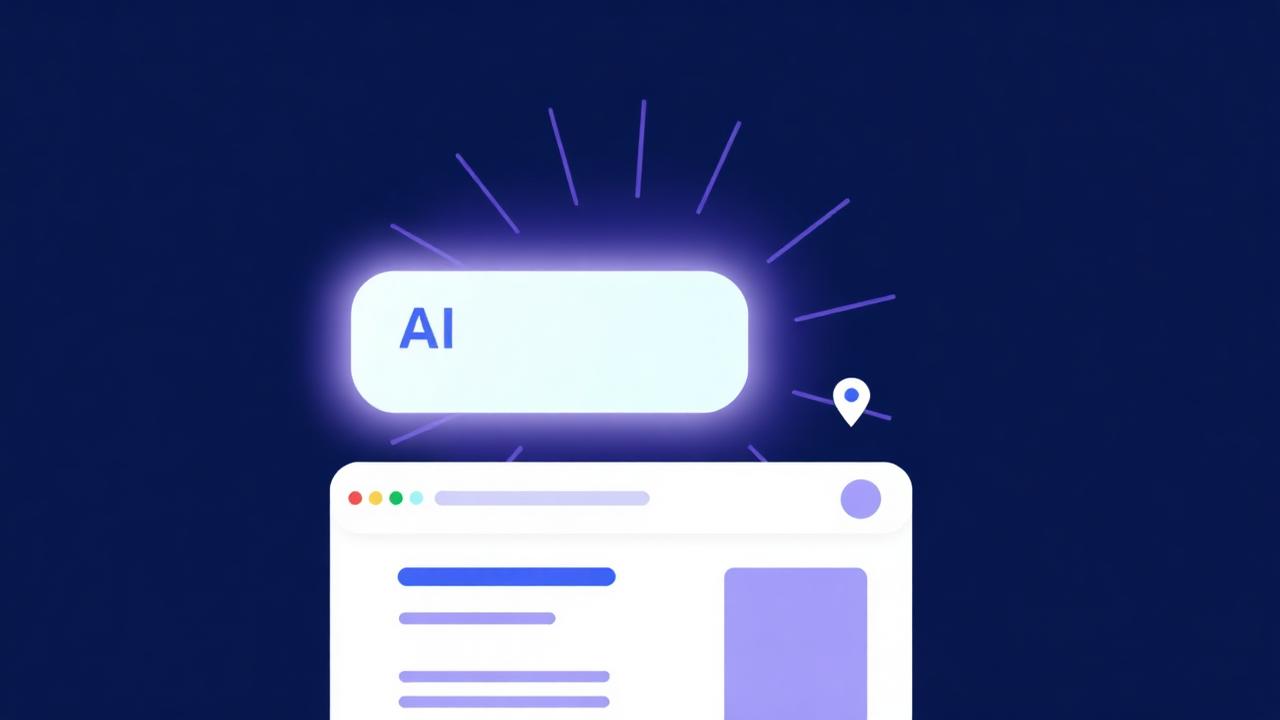
Google's AI Overviews (AIO, formerly SGE) now appear on a large share of local commercial queries. When they trigger, they push traditional blue-link results below the fold. If you're not one of the 3–8 cited sources in the AIO answer, you might as well not exist for that query.
This is the guide we wish someone had handed us 18 months ago — what changed, what to measure, and what to actually ship.
The click-loss reality
Multiple 2024–2025 studies (Semrush, Similarweb, Advanced Web Ranking, Authoritas) converge on the same number: queries with an AIO lose 30–60% of their organic clicks to no-click behavior. That click loss is not evenly distributed.
- Cited sources in the AIO answer often gain clicks
- Non-cited "traditional" #1 positions can lose 40%+ of their prior traffic
- Featured snippets are cannibalized about half the time when AIO triggers
Being cited is now the ranking that matters.
Which queries trigger AIO?
AIO is more likely to fire on:
- Informational queries ("how do I…", "why does…", "what's the difference…")
- Multi-step or comparative queries ("best X for Y")
- Local-intent + context queries ("family dentist in Austin that takes Delta Dental")
AIO is less likely on:
- Pure transactional queries ("nike air max size 10 buy")
- Branded queries ("dominos pizza login")
- YMYL medical queries with high liability
What Google looks for in AIO citations
Reverse-engineering hundreds of AIO answers, three patterns dominate.
1. Fresh, well-structured content
AIO citations skew hard toward content updated within the last 6–12 months. A great post from 2020 gets crowded out by a mediocre post from 2025 with an updated date and a couple of new stats.
Action: quarterly content refresh cycle on top pages. Update dates, refresh stats, add a new example, republish. It's the highest-ROI content work most teams still skip.
2. Direct-answer format
AIO stitches together sentences. Content that answers the question directly, in one paragraph at the top, then expands, gets pulled disproportionately. Journalism inverted-pyramid style beats textbook long-intro style.
Action: rewrite intros to answer the query in ~50 words before any context or backstory. Then use H2s to break out sub-questions.
3. Local entity signals
For local queries, AIO leans on Google Business Profile, review sites, and local news. Your website's authority matters less than your entity's presence across the local knowledge graph.
Action:
- Complete GBP to 100% (services, attributes, products, Q&A, photos, posts)
- Get to 50+ reviews with recency in the last 30 days
- Add LocalBusiness + FAQ schema on service pages
- Ensure Google can map your entity confidently (same NAP, same categories, same hours across the top directories)
The AIO opportunity quadrant
Not every query triggers AIO. Prioritize like this:
                  You are cited        You are not cited
              ┌─────────────────┬─────────────────────┐
AIO triggers  │  MAINTAIN       │   PRIORITY #1       │
              │  (protect it)   │   (fix now)         │
              ├─────────────────┼─────────────────────┤
No AIO yet    │  MONITOR        │   PRIORITY #2       │
              │  (may trigger)  │   (prep for launch) │
              └─────────────────┴─────────────────────┘
Spend 70% of your effort in Priority #1 — queries where AIO already fires and someone else is getting the citation you want.
A concrete example
A dental practice in Austin tracked 30 local queries. Baseline:
| Query | AIO triggers? | Practice cited? |
|---|---|---|
| best family dentist in Austin | Yes | No |
| pediatric dentist near me Austin | Yes | No |
| Invisalign cost Austin | Yes | Yes (position 4) |
| emergency dentist Austin | Sometimes | No |
| dentist accepts Delta Dental Austin | Yes | No |
Their 60-day plan:
- Rewrote 6 service-page intros to answer the exact query in the first 50 words
- Added FAQ schema listing 8 real patient questions per page
- Ran a targeted review campaign focused on insurance keywords ("… accepted Delta Dental with no issues …")
- Pitched a local health blog for a "best pediatric dentists Austin 2025" roundup
After 8 weeks: cited on 12 of the 30 queries (up from 1). Referral traffic from Google grew 34%.
The measurement problem
Google's own tools don't tell you:
- When AIO triggered for a query
- Who was cited
- How the citation set changed
You have two options: check manually (unscalable past ~20 queries) or use a tracker like AI Ranker's Google AIO monitor that detects AIO presence, captures the citation set, and diffs weekly.
Common mistakes
- Optimizing for #1 blue-link. With AIO you can be #1 and still lose 40% of your clicks. Optimize for citation, not rank.
- Long, meandering intros. AIO won't quote a 300-word setup. Answer in the first paragraph.
- Missing schema. LocalBusiness, FAQ, HowTo, Product schema materially increase citation rates.
- Ignoring GBP. For local queries, your GBP is often more important to AIO than your website.
- One-shot content. Publish and forget = get crowded out in 6 months. Set a quarterly refresh cadence.
Bottom line
AIO isn't Google punishing your rankings — it's Google redistributing them. The businesses that adapt fastest earn a permanent citation spot. The ones that keep optimizing for #1 blue-link keep losing clicks. Start with the AIO opportunity quadrant, ship the direct-answer + schema + freshness fixes, and measure the citation set — not the rank.
How to appear in Google AI Overviews for local queries
A practical checklist to increase how often your business is cited or linked in Google's AI Overview answers.
- 1Identify AI Overview-triggering queries
Search your top 30 local queries in an incognito window. Note which trigger an AI Overview and which sources it cites.
- 2Optimize your Google Business Profile
Complete every field, add high-quality photos, keep hours accurate, and reply to reviews. GBP is the strongest local AIO signal.
- 3Publish direct-answer content
For each triggering query, publish a page that answers it in the first 40–60 words, followed by supporting detail and FAQ schema.
- 4Add LocalBusiness and FAQPage schema
Mark up location pages with LocalBusiness schema and Q&A sections with FAQPage schema so Google can extract facts confidently.
- 5Earn local citations and reviews
Consistent NAP across directories plus a steady stream of recent reviews increases the odds of being cited in AI Overviews.
- 6Re-audit monthly
AI Overview coverage changes fast. Re-run your query set monthly and note new sources being cited so you can pursue them.
Frequently asked questions
- Do AI Overviews replace the local map pack?
- No. AI Overviews sit above or alongside the map pack for many local queries, but the map pack still appears. Both matter, and both are influenced by a strong Google Business Profile.
- What content format does Google AI Overviews prefer?
- Direct answers in the first 40–60 words of a page, followed by clear subheadings, bulleted lists, and FAQ sections. Well-structured, factual content wins.
- How can I tell if my business is being cited in AI Overviews?
- Manually search your top local queries in incognito and inspect the source links, or use an AI search tracker that logs AIO citations per query over time.